How to Use a Loan to Improve Soil Health on Your Oklahoma Ranch
Healthier soil can mean better grass, steadier stocking and fewer bad surprises in a dry year, but the improvements rarely pay back overnight. This guide explains how to think about borrowing for soil work on an Oklahoma ranch before you sign anything.
Why would a rancher borrow money for soil health?
Pasture soil is the factory behind every pound of calf. Practices like rotational grazing infrastructure, reseeding, fertility programs and brush control cost money up front and pay back slowly, which is exactly the situation where a loan can make sense, or not.
The honest test is simple. If the work is likely to raise carrying capacity or cut input costs, and the numbers still work at a cautious estimate, borrowing may fit. If the case depends on a perfect rain year, slow down and talk it through with someone local.
What soil projects do ranchers usually finance?
Most soil-health spending falls into a few buckets. Some of it is a one-time capital cost and some is a recurring expense, and lenders treat the two differently.
Ask your lender how they classify each item, because a fence you build once is easier to finance over years than a fertilizer bill you will need again next season.
- Cross fencing and water lines that make rotational grazing possible
- Reseeding or interseeding improved forages
- Soil testing and a written fertility plan
- Brush and invasive species control
- Erosion repair on gullies and stock trails
Where can free help lower what you have to borrow?
Before you finance anything, check whether technical or cost-share help exists. USDA NRCS runs conservation programs that can help with planning and some practices, and your local conservation district office can point you to the right one. Signup windows and eligibility rules change, so confirm the current details with the office.
OSU Extension also offers soil testing guidance and grazing education in Oklahoma, and the SARE research library has plain-language reports from working farms and ranches. Using these first can shrink the loan you need.
How do you compare lenders for a soil improvement loan?
Oklahoma ranchers can usually talk to local banks, credit unions, a Farm Credit association and the USDA Farm Service Agency loan programs. Each has different terms, and rates and fees change, so ask each one for current numbers in writing.
If you want a refresher on how repayment terms interact with cash flow, the money basics at this farm money guide are a good place to start. Compare the total cost, not just the headline rate.
- What is the repayment term and does it match how long the improvement lasts?
- Are there origination or servicing fees?
- Is there a prepayment penalty if a good year lets you pay early?
- Does the loan need collateral beyond the improvement itself?
What should you bring to the loan conversation?
Lenders want to see that you understand your operation. Bring several years of tax returns, a current balance sheet, a production history for the cattle or hay you sell, and a short written plan that explains what the soil work will change.
A plan with before and after assumptions helps. Try an example: if a reseeding project is expected to let you carry a few more pairs, write down what you would sell and what it costs to run them. Then test the plan at a lower number to see whether it still holds.
Also bring questions of your own. A good lender expects them, and the answers often reveal how flexible the terms really are. Write down what you hear from each lender so you can compare later without relying on memory.
What are the risks to think through first?
Drought is the big one on Oklahoma rangeland. A stand that is thriving in spring can stall in a hot July, and your payment is due either way. Build a cushion into the plan and ask the lender how they handle a missed rain year.
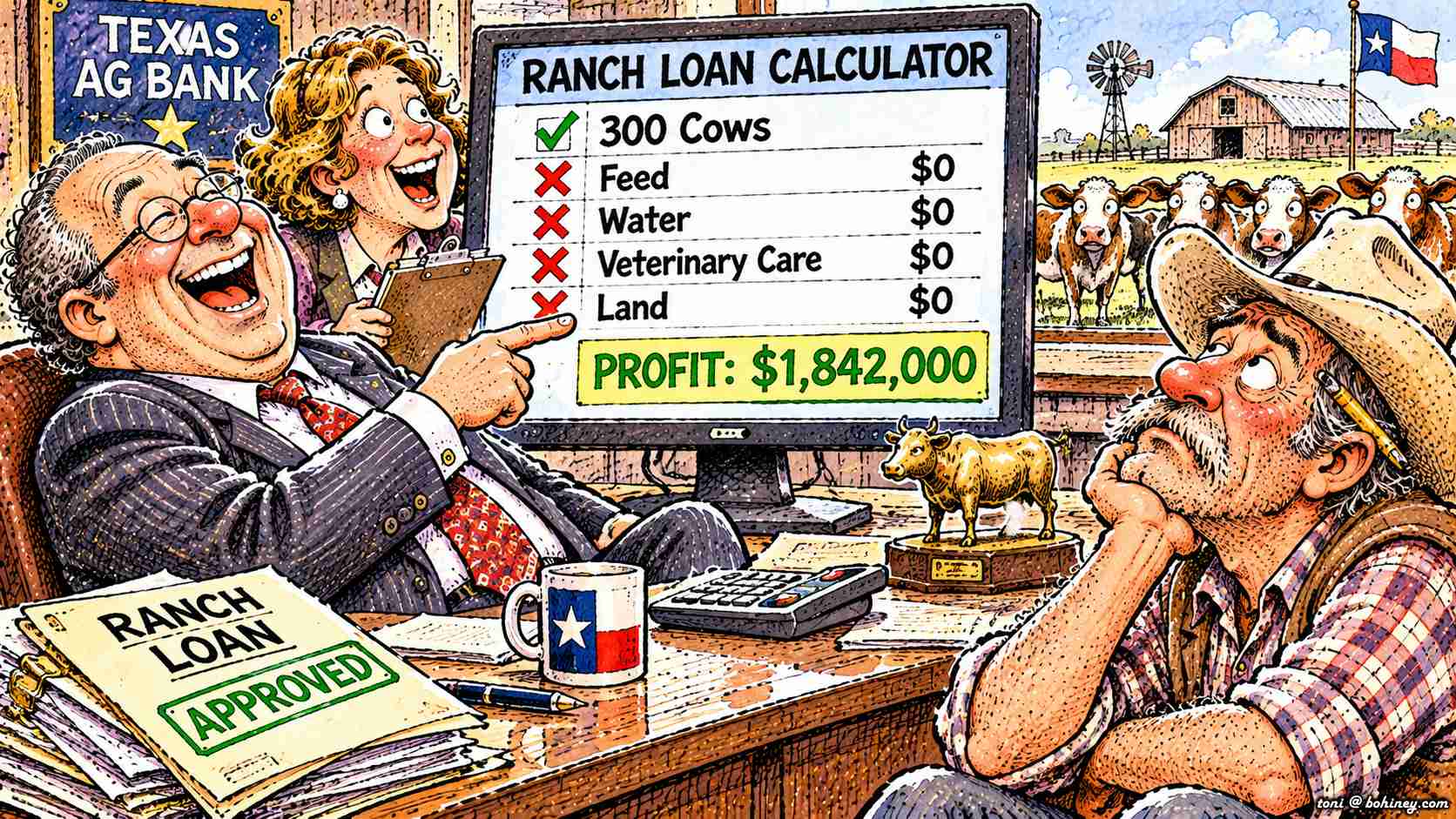
For a broader look at protecting a cattle operation through tough seasons, the herd and range advice at this beef cattle resource covers the production side. And if the whole idea of debt makes you wince, the folks at farm.FM satire have been poking fun at ranch budgets for a while.
Where do state and federal numbers help your planning?
Use public data to keep your assumptions honest. The U.S. Drought Monitor shows how dry conditions have been across Oklahoma, and the Oklahoma Department of Agriculture, Food and Forestry lists state programs that may touch your project. Check both before you finalize a budget.
For the wider economics of ranching, farm.FM ranch economics stories collect plenty of reading, including a farm.FM piece on pasture improvement costs.
Sources and further reading
- USDA NRCS: conservation programs and technical help
- OSU Extension: Oklahoma State extension
- FSA Farm Loans: FSA direct, guaranteed, microloan and emergency loan information
- Farm Credit: cooperative agricultural lending network
- SARE: sustainable agriculture research and education
- Oklahoma Dept. of Agriculture, Food and Forestry: state agriculture agency
Ask locally: Ask your county OSU Extension office or conservation district in Stillwater or near you, and talk with a licensed lender or accountant about your numbers.
General education only, not financial, legal or tax advice, and Oklahoma Rancher Loans is not a lender. Rates, terms and deadlines change, so confirm current details with the lender or agency.